After All
Song Meaning
After All is David Bowie’s meditation on the illusion of adulthood, arguing that grown-ups are really just “taller children” who mask fear and fragility behind rules and anger.
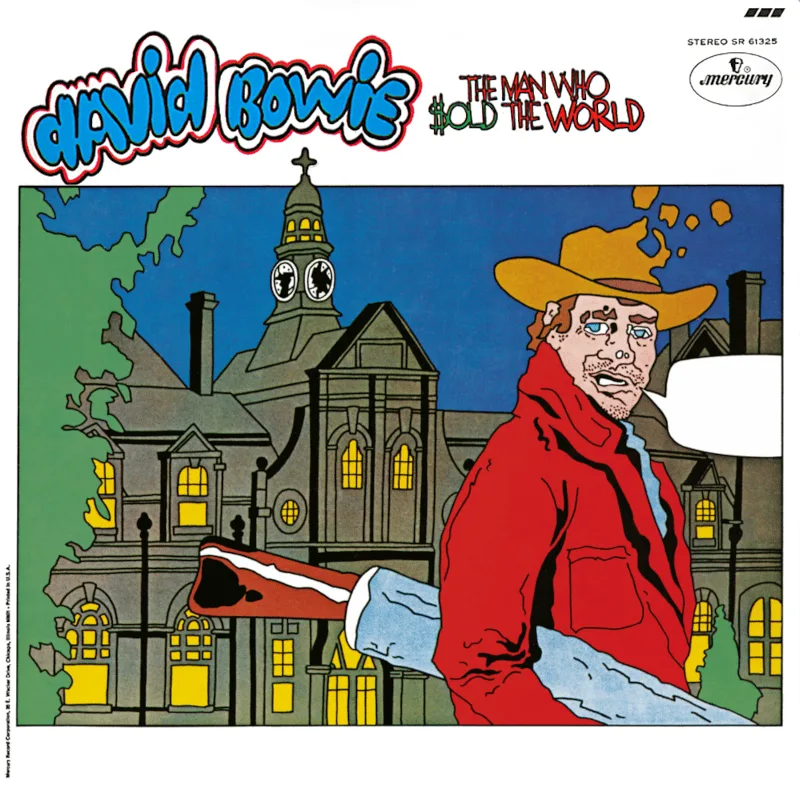
After All explores the idea that adults never truly leave childhood behind, they’re merely “taller children” hiding insecurity beneath rules, anger, and false authority 2. Drummer Woody Woodmansey said the song’s central idea is that “we all grow old, but that we still remain children at heart” 1, while Bowie also seems to reject the 1960s hippy dream and its “contrived innocence” 1. The song pairs this theme with references to Aleister Crowley’s Thelema (“do what thou wilt”) and Nietzschean philosophy, urging listeners toward personal freedom beyond conventional moral constraints 1 2 3.
The meaning
At its core, “After All” builds around the idea that the line between childhood and adulthood is a fiction. Bowie’s drummer Woody Woodmansey summed it up simply: “we all grow old, but we still remain children at heart” 1. The lyrics make this literal, calling adults “just taller children” and the elderly “older children,” stripping away the pretense of maturity to reveal something more fragile and small underneath 2.
Musically, Bowie reinforces this with a 3/4 waltz rhythm and acoustic textures that recall a music box or carousel, styled after the “slightly sinister, measured melancholy” of childhood songs like Danny Kaye’s “Inchworm” 2 3. The multi-tracked, whispered vocals create the effect of a ghostly children’s choir, an eerie sonic contrast that mirrors the lyrical tension between innocent surface and adult dread underneath 2.
That tension carries a real emotional plea. Lines like “please trip them gently, they don’t like to fall” have been read as a call for empathy toward the vulnerable 4, and one biographer described the song’s theme as “a plea for peace, a hand held out to the older generation that didn’t quite understand... what we youngsters were on about” 1. At the same time, Bowie appears to push back against his own generation’s idealism, seemingly rejecting the 1960s hippy dream and its “contrived innocence” that made its followers just as childish as the adults they criticized 1.
The song’s philosophical backbone comes from two very different sources Bowie was reading at the time: Aleister Crowley and Friedrich Nietzsche. The command to “live till your rebirth and do what you will” directly echoes Crowley’s Thelemic law, “do what thou wilt shall be the whole of the Law” 1 2 3, while the line “man is an obstacle, sad as the clown” reflects Nietzsche’s Übermensch philosophy, the notion of pushing past ordinary human limits 1 3. Some listeners have also connected the rebirth imagery to Buddhist ideas of reincarnation Bowie was exploring at the time 1.
By the closing verse, “forget all I’ve said, please bear me no ill,” the song seems to let go of its own argument, ending not with a resolved philosophy but with a request for forgiveness 4. That unresolved quality fits the song’s larger point: beneath adult seriousness, whether political, moral, or philosophical, Bowie suggests we remain “nobody’s children at all” 1, improvising our way through fears we never really outgrow.
Sources
Songs by David Bowie
Last updated 2026-09-08