Oye Cómo Va
Song Meaning
“Oye Cómo Va” is Santana’s Latin rock reworking of Tito Puente’s Cuban cha-cha, a simple, joyful dance invitation meant to help listeners forget their troubles rather than a song with hidden symbolic meaning.
“Oye Cómo Va” is fundamentally a party song about dancing, not a piece of hidden symbolism. Tito Puente, who wrote it, explained the title plainly as “listen to how it goes, come and enjoy it,” describing the tune as a Cuban cha-cha built for dancing 1 2. When Carlos Santana turned it into a rock hit, he deliberately kept that spirit intact, comparing it to “Louie Louie” as the kind of song that makes people “drop their sorrows or problems” 1. Its meaning lives less in poetic lyrics, since the words amount to little more than a repeated dance invitation, and more in the fusion of Afro-Cuban rhythm with electric rock guitar that turned a simple cha-cha into a genre-crossing celebration 2.
The meaning
The lyrics of “Oye Cómo Va” are sparse by design: “Oye cómo va / mi ritmo / bueno pa’ gozar / mulata” (listen to how my rhythm goes, it’s good for enjoying). Tito Puente, who composed the song, was direct about what those words mean: “Oye Como Va, that means: listen to how it goes, come and enjoy it. That’s what the lyrics mean” 1 2. He called it a cha-cha rooted in Cuban rhythm, music “very popular in them days” that people danced to 1. A later writer summed up the original as having “simple, partying lyrics” wrapped around a catchy groove 1, and the title’s literal translation as roughly “how’s it going?” adds a layer of playful ambiguity rather than deep meaning 1.
The song didn’t emerge in a vacuum. According to musicologist Max Salazar, Puente borrowed only the introduction from an earlier Cuban tune called “Chon Chu Yo,” building the rest of “Oye Como Va” on top of that foundation 2. Puente’s son has said his father simply wanted “a nice cha cha cha that is danceable and easy to sing” 3, reinforcing that the song was conceived as functional dance music first and foremost, not as a vehicle for lyrical storytelling.
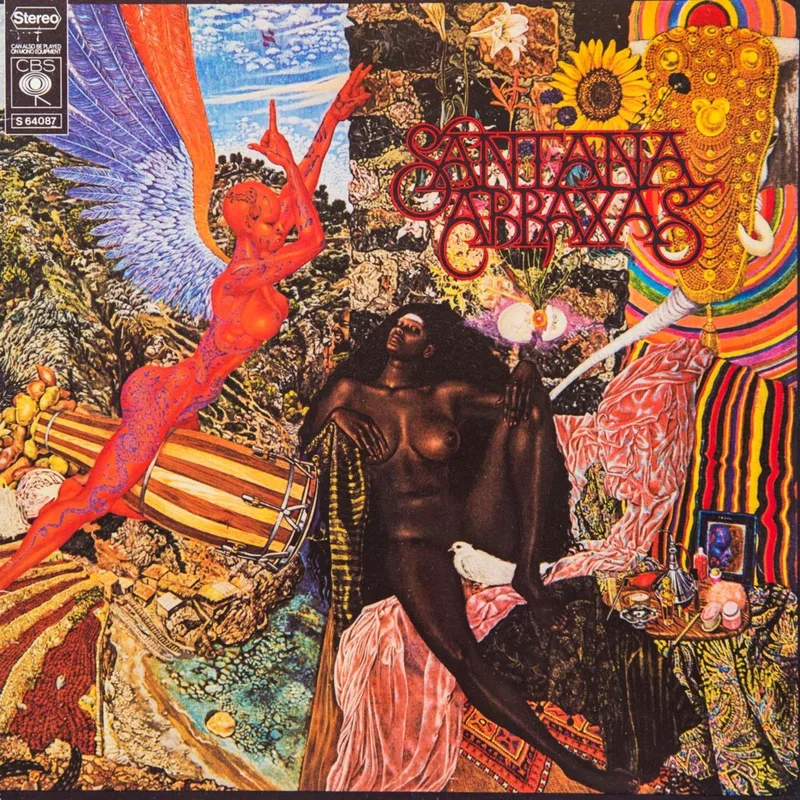
When Carlos Santana adopted the song for his 1970 album Abraxas, he understood exactly what kind of song he was covering, and he protected that identity. He recalled having “to put my foot down” for the track, viewing it in the same category as “Louie Louie,” “La Bamba,” or “Macarena”: a song built to spread instantly and “make people drop their sorrows or problems” 1. That’s the emotional core of the song’s meaning as Santana saw it: not a message to decode, but a release valve, a piece of music engineered for collective joy.
What Santana added was texture, not narrative. Guitarist Cesar Rosas described Santana’s version as fusing “the most romantic two elements ever,” blues-based rock guitar and Latin music, a combination that “just exploded” 2. Ethnomusicologist Steven Loza noted that despite all the new instrumentation, the bass line, congas, and timbal rhythms kept the arrangement rooted in “authentic Latin-Cuban rhythms” 2. In that sense, the song’s meaning is inseparable from its sound: it represents the moment Afro-Cuban dance music and American rock guitar merged into something new, carrying the original’s party spirit into a wider audience.
That spirit is why the song has endured. Puente’s son has said it “continues to bring people together to dance and sing together, around the world” 3, and musician Mark Johnson credited it with being “full of positive energy and soul” that “makes people feel joy” 3. More than five decades on, “Oye Cómo Va” still functions exactly as its writer and its most famous interpreter intended: an invitation, repeated over and over, to simply listen to the rhythm and enjoy it.
Sources
Songs by Santana
Last updated 2026-08-22